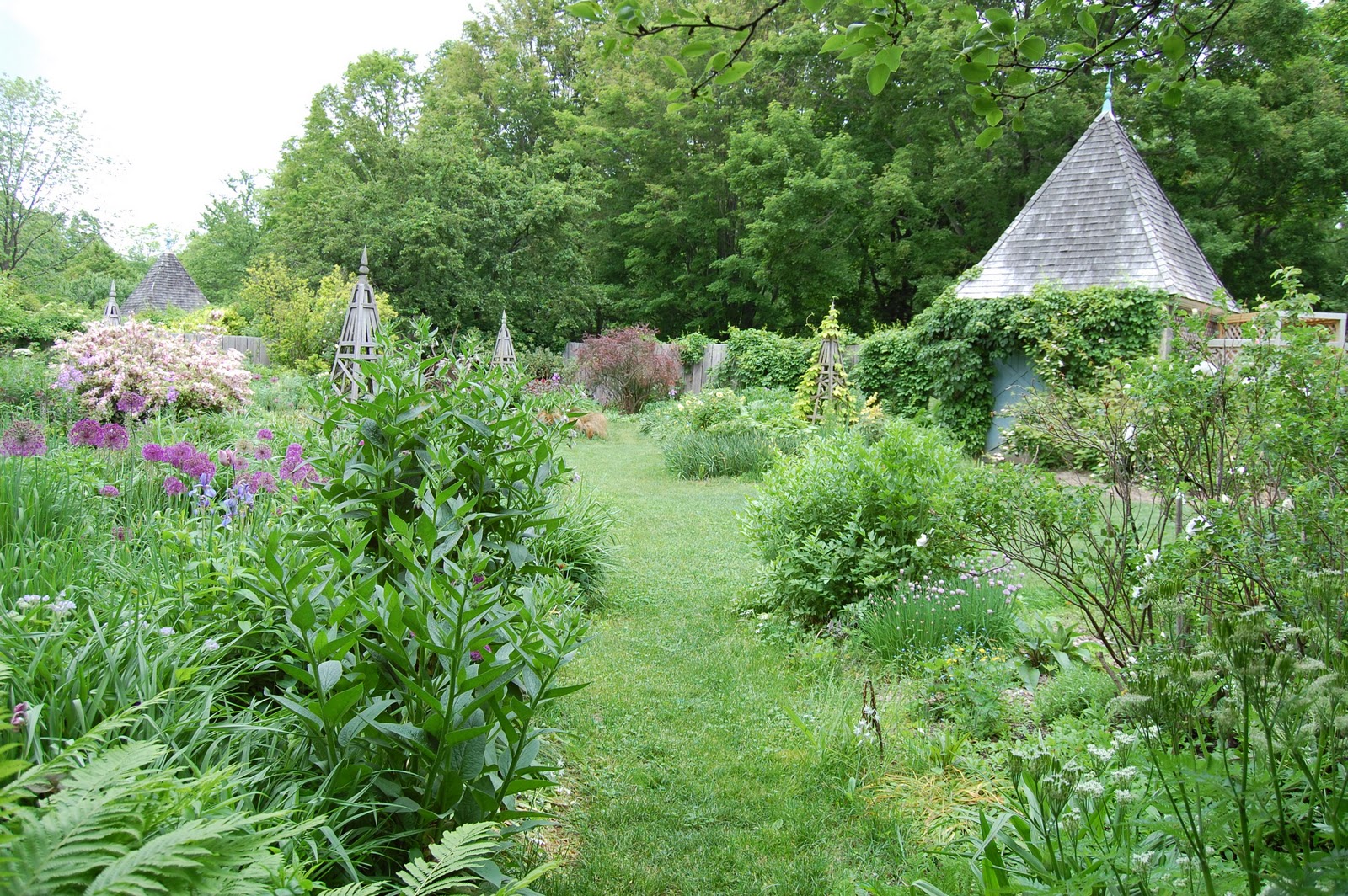
On the sporadic nature of recent blog posts:


Who doesn’t get discouraged, or busy, or both? There’s solace in the fact that dormancy – the gathering in of energies and their conservation for an opportune moment – always breaks.


Showing posts with label Village Zendo. Show all posts

Monday, February 7, 2011

The Leisurely One

Pardon the hiatus but I was in Uruguay with my partner Kazim visiting family in January. 

   Two times a year my sangha, The Village Zendo, engages in Ango practice.  Hearkening back to the original rainy season retreats of the early Buddhist sangha, ango (meaning "peaceful dwelling") is a period of intensified daily practice.  We are currently in an Ango period, and the study text for this period is a long poem by the Chinese Zen master, Yongjia Xuanjue, called the Zhengdaoge (Shodoka in Japanese).  I have decided to read it stanza by stanza with an ear towards what it says about my farming practice, and will occasionally make posts on thoughts that arise

"There is the leisurely one,
Walking the Tao, beyond philosophy,
Not avoiding fantasy, not seeking truth.
The real nature of ignorance is the Buddha-nature itself;
The empty delusory body is the very body of the Dharma."


“There is the leisurely one…” What might it mean to farm leisurely? Hardly “gentleman farming,” rather a kind of poor man’s farming.
 
Chuangzi: So removed from civilization were they that they forgot how to speak.
Mumon: His speech is rough, his writing illegible.
 
To farm leisurely might mean farming
 
as if your life depended on it,
as if farming was your life,
as if life was nothing but farming.


As if:

In June Kazim and I pick deep red-purple serviceberries from the trees in Tappan Square in the pallid violet of twilight.

In the evening I pad out the back door and through the high grass to pick orange day-lily blossoms one day short of bursting open into a great steel bowl. Then I string them with needle and thread and hang them to dry for winter soups and stir-fries.

Hurrying ahead of the wave of frost, we work though the evening until even headlights aren’t enough, picking tomatoes and peppers, hanging the immature cayennes upside down so that they continue to ripen to red.

Cattails in spring, lamb’s quarters in summer, mushrooms in autumn.

Hang acorns in an onion bag in a toilet tank and with each flush slowly leach the tannins. Every week hang mint to dry for winter tea.

Save seeds at every opportunity. Seeds in pants pockets, shirt pockets, stuffed in backpack pouches. What were these again?

Read and dream and forget. Hatch plans.

Spend evenings chopping, washing, mixing, pickling.

Monday, December 13, 2010

A Year in Pictures: 2010

Spring

Preparing a bed for planting peas.


Judy Laushmann, Ben Knowles, Mandy Fracchione, and Kazim Ali pull weeds and harvest dandelion roots for roasted dandelion tea at the same time.

Domenico Ruggierio of Oberlin College's Multicultural Resource Center uses a broadfork to aerate soil without disturbing its profile.


The Hawken School and Cleveland Oberlin College Alumni showed up in force to prepare the fields and plant leeks!  Thanks to Matt Young of Hawken School and Kira McGirr of Cleveland OC Alums for organizing this, and thanks to all the parents, students, and alums who came out.


Springtime greenhouse:  lettuces, scallions, Chinese cabbage.


Royal Oakleaf Lettuce.


Touring Old Haunts During a Spring Trip Away from the Farm

Stonecrop Gardens, Cold Spring, NY:  A plant-lover's paradise, and where I spent a year training as a horticulturist.

Stonecrop's Gunnera tinctoria.  The Chilean Rhubarb is the largest herbaceous plant on Earth.  The tallest leaf in this picture is about 7ft tall and still growing!  Though hardy to Zone 8, gardening wizardry keeps this plant alive in Stonecrop's Zone 4 weather.

Stonecrop:  A straw Gertrude Jekyll overlooks the vegetable garden.


Stonecrop:  the Flower Garden.


Stonecrop:  the Gravel Garden.

Stonecrop:  The Wisteria Pavilion.

Stonecrop:  The Horticulture Library.

The Cloisters, New York, NY:  A refuge of calm in the busy city, The Cloisters is a branch museum of The Metropolitan Museum of Art dedicated to Medieval art and culture.  It is so named for the series of open courtyards that house period-style gardens.  I was a horticulturist here for three years.

Hops climbing up the Bonnefont Arcade.


Trie Cloister.


The Village Zendo, New York City:  My home temple where I have practiced Zen for 11 years.


Summer

Garlic, garlic everywhere.  Summer interns Ben Agsten, Emma Cunniff, Gabe Baldasare, Patrick Gilfeather, Assistant Grower Freed, Ian Burns, and WIlly Wickham.

Garlic:  bunching and hanging.  For the next week the strawbale building was redolent with the pungency of curing garlic, somewhat yeasty like baking bread.

Oberlin Farmers' Market Stand:  Me and Freed manning the stand.


Fall

Oberlin College Annual Day of Service:  Every year the George Jones Farm hosts new first-years who come out for a day of volunteer service as part of their orientation.

Day of Service:  Weeding a greenhouse to get it ready for fall planting.

Day of Service:  Education Coordinator/Operations Manager Evelyn Bryant and a volunteer planting lettuce.

Day of Service:  Weeding turnips and lettuce mix.

 Day of Service:  the last big project of the day was replacing the plastic on this greenhouse.
It was a team effort.

Thank OC first-years for all your help.  Welcome to Oberlin!

November Markets at the Farm

We still had lots of produce to offer.

A happy customer with her edible holiday wreath.