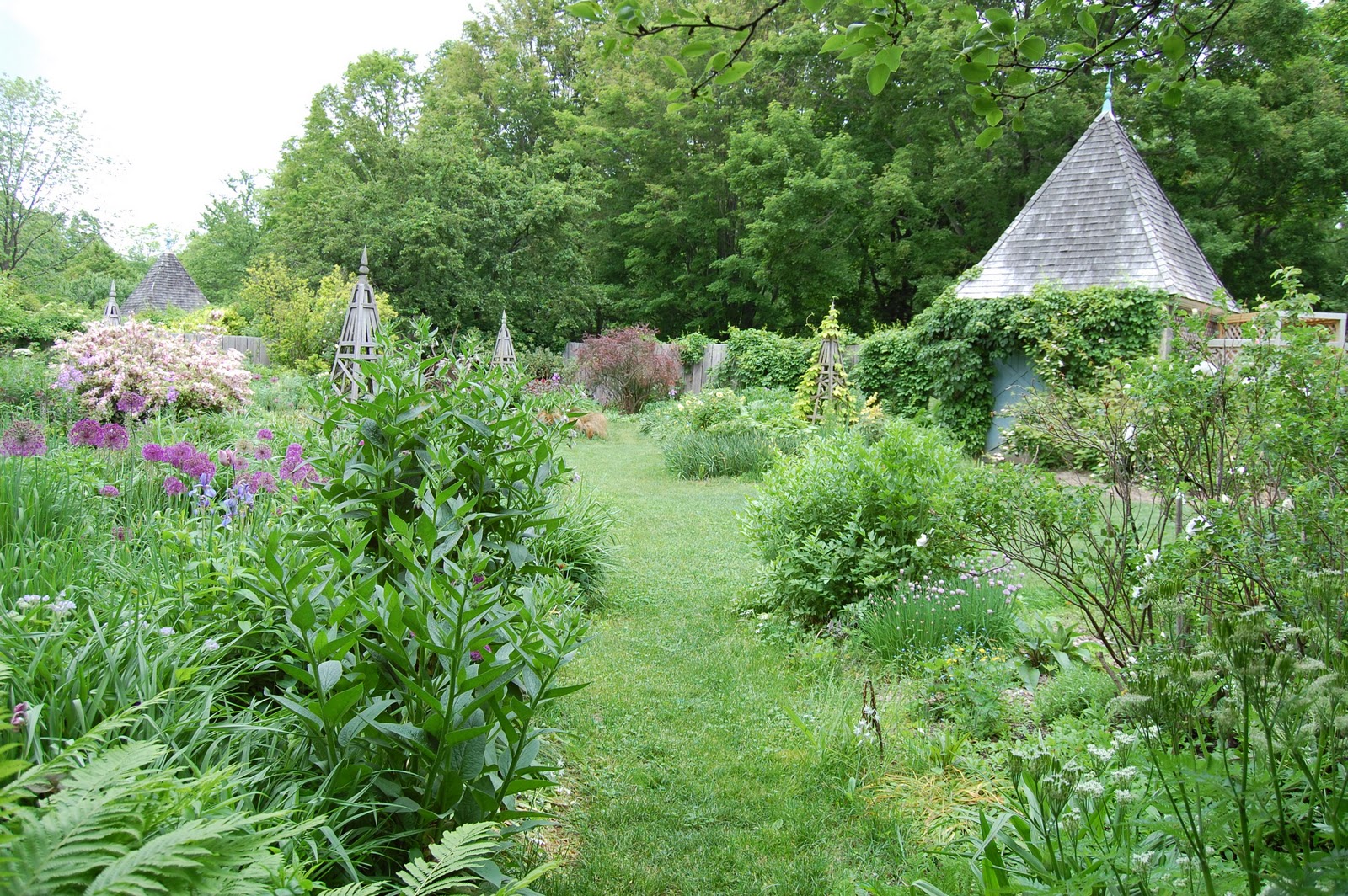
On the sporadic nature of recent blog posts:


Who doesn’t get discouraged, or busy, or both? There’s solace in the fact that dormancy – the gathering in of energies and their conservation for an opportune moment – always breaks.


Showing posts with label Oberlin College. Show all posts

Friday, March 18, 2011

Life-Bombs

This spring four Oberlin College Environmental Studies students will be working with me on my garden and learning farming skills and sustainable agriculture concepts along the way. Last week they came for our first session to begin at the beginning: seeds.


Ground

    As limpid late winter sunlight streamed into my dining room, we dampened seed-sowing mix and tamped it into seed trays. We talked about the peat bogs that had been mined to bring us this most amenable medium. Peat moss is the accumulated work of thousands of years of dilligent living by sphagnum moss. Leaves composed of a single layer of cells unfurl continuously upward while older ones die off below but continue to serve by wicking water up to those green blades above. Where do living and dying meet in this intimate mini-world? Over years, decades, centuries of living, the moss' dying remains create an environment so acidic as to prevent any organisms from entering to engage in the normal business of decay. Ultimately, deep bogs coated in shimmering green are formed. In World War I when bandages ran short, it was the silent work of centuries by moss that came to the rescue, with fluffy antiseptic peat moss used to stanch wounds. One death warding off another. In ancient Ireland, a peat bog was the final resting place for a sacrificial victim whose luck it was to find this antiseptic home. One death preserving another. This is where your potting soil comes from. One death nurturing new life.
 
    Peat bogs are however, like oil, a finite resource and the work of millenia is being consumed too quickly. Coir, or the hairy husk of coconuts that are a normally trashed byproduct of the coconut industry, has also recently come into use as an alternative to peat moss. While the recycling aspect of coir as potting mix is laudable, is replacing one endangered resource with another non-local resource the best option? In many English gardening books, seed-starting mediums are usually described as "composts," designated in their fineness by numbers. While this may simply refer to peat moss mixes, it points back in gardening history to the original solution of sifting compost. Compost would be "riddled" through screens of varying gauges for a determined fineness. Though I admit I am using commercial peat-moss-based mix this year for my seedlings, perhaps investing some time in sifting some of my own compost for future seedlings is the most local sustainable way of beginning the season.


Seed

    Our trays formed, we sat down with seeds: brassicas and lettuce, zinnias and pansies. As we made shallow furrows (no more than twice deep as the size of the seed) in our trays, I explained that seeds are life-bombs and water is the fuse. In dicot seeds, a tiny proto root and leaves are nestled inside of two larger cotyledons or food storage organs and all of this is surrounded by a seed coat. As soon as water penetrates the seed coat, enzymatic processes surge and the cotyledons swell, rupturing the seed coat as the root burrows into the soil. A tiny cluster of stem cells (called meristematic cells) at the tip of the root divide rapidly forming a root cap like a drill tip on the outer surface and vascular cells in the interior that lengthen and push with tremendous force capable of rupturing stone. Just behind this tip the root forms cells on its outer surface that extend in ultra-fine filaments or hairs into the soil to absorb water. The fine fuzz on the soil surface as seeds burst upward are individual cells sipping moisture. As the root burrows down, the cotyledons unfold like hands revealing the tiniest of leaves within and another packet of meristematic cells that will produce all above-ground parts of the plant. Like rocket boosters taking a satellite into orbit, the cotyledons are the only source of energy for the dramatic growth of seedlings until the leaves unfurl like solar panels to begin photosynthesizing.

    To call seeds bombs, roots drills, and leaves solar panels is not too metaphoric. The power of seeds' explosive growth in their early stages of germination can alter the landscape, however minute that terrain might be. Some seeds are more powerful than others, and an old gardener's trick takes advantage of this by planting radishes and parsnip seeds together. Radishes are among the quickest harvests, and an especially satisfying first gardening experiment for young children who need instant gratification. From seeding to crunchy spicy treat, radishes take about a month. Parsnips on the other hand are incredibly slow, both in germination and in ultimate harvest. By planting parsnip seeds alongside radishes, the gardener takes advantage of the radishes' explosive growth to break open the soil so that the comparatively more gentle parsnip can easily reach the sunlight.

    Plants with tap roots are particularly useful as natural drills in the dense clay soils that we have here around Oberlin. Their main root burrows deep in the ground, not only bringing up deep soil nutrients to the surface through their leaves, but fracturing and aerating the soil. Some gardeners plant daikon radishes in their fields and then deliberately leave them there unharvested to rot through the winter. Each root is like a garden fork and fertilizer in one, breaking up the soil and then decomposing into rich humus by spring.

    Finally, leaves truly are solar panels in their ability to convert the energy of the sun into chemical energies stored in sugars and starches. They power all life on the planet. As Michael Pollan wrote in his important letter to then-President-Elect Obama entitled "Farmer in Chief," we can solve many of our national problems by coming to terms with the reality of our "solar economy." Life truly does revolve around the sun and it is leaves that harness its power.

   I am writing about seeds as bombs, roots as drills, and leaves as solar panels, but this is merely reverse-engineering language and by extension the world. We would do better to discuss bombs as seeds, drills as roots, and solar panels as leaves. How would our thinking and our actions shift if we set these plant parts as the ground for our human language?


Seedling

    Having sowed our seeds, the students and I looked at some trays I had seeded two weeks before: kale and calendula. Cotyledons were unfurled and the first leaves were developing. We "pricked out" the seedlings, that is, transplanted them from their cramped seed trays into more commodious flats, 72 plants to a flat. This is my favorite plant propagation task. There is a meditative quality to the delicacy of the maneuvers that I first learned to appreciate during my training days at Stonecrop Gardens, where myself and the other interns spent many early spring hours in the potting shed at this work.

    When pricking out, one should always remember that roots and root hairs are incredibly delicate and that while there are usually two cotyledons and more than one leaf, there is only ever one stem on a seedling, so one should never grab a seedling by its stem lest it get crushed. Chopstick in one hand nudging roots apart from each other, and the fingers of the other hand delicately holding a cotyledon, we teased apart our seedlings. After making a hole in the mix for the new seedling, it is best to submerge it as deeply as possible in the cell, up to but never above the level of the cotyledons. Burying the stem might seem counter-intuitive, but it helps to anchor the new plant. After gently nudging soil mix over the roots it's on to the next seedling. When a whole flat is planted up, it's time to bottom-soak it. Bottom-soaking is preferable to watering from above because it is more gentle and the water acts as a million tiny hands reaching up through each soil particle to remove air gaps and to ensure that the delicate roots come into contact with the soil mix.

    As we worked our way through our kale and calendula seedlings, we talked about environmental studies and I asked the students, "What do you need for a local food economy?" Renewable energy, infrastructure, compost, transportation. "What else?" I asked. After lots of good ideas, I shared my own: people who know how to grow food. Going from seed to seedling to plant to harvest is hardly a simple process and it is a knowledge-set that can only truly be acquired through experience. If we are going to create the web of relationships required to live locally, many more of us will have to be involved in food-growing. These four students began taking their first steps toward the knowledge and experience of how to do that.

    For me the ideal would be that everyone grow at least some of their food. Even if only growing a small pot of lettuce greens on a windowsill in Brooklyn or the Upper West Side (or an edible fern like Ostrich Fern, Matteucia struthiopteris, for those in shadier apartments?), the act of eating a leaf or a fruit or a frond of something you have grown and lived with begins the road to the solar economy. These plants in the backyard or on the windowsill are our own solar power plants, or better yet we should flip that metaphor around and begin seeing solar power plants as leaf mirror gardens in the desert.

Monday, December 13, 2010

A Year in Pictures: 2010

Spring

Preparing a bed for planting peas.


Judy Laushmann, Ben Knowles, Mandy Fracchione, and Kazim Ali pull weeds and harvest dandelion roots for roasted dandelion tea at the same time.

Domenico Ruggierio of Oberlin College's Multicultural Resource Center uses a broadfork to aerate soil without disturbing its profile.


The Hawken School and Cleveland Oberlin College Alumni showed up in force to prepare the fields and plant leeks!  Thanks to Matt Young of Hawken School and Kira McGirr of Cleveland OC Alums for organizing this, and thanks to all the parents, students, and alums who came out.


Springtime greenhouse:  lettuces, scallions, Chinese cabbage.


Royal Oakleaf Lettuce.


Touring Old Haunts During a Spring Trip Away from the Farm

Stonecrop Gardens, Cold Spring, NY:  A plant-lover's paradise, and where I spent a year training as a horticulturist.

Stonecrop's Gunnera tinctoria.  The Chilean Rhubarb is the largest herbaceous plant on Earth.  The tallest leaf in this picture is about 7ft tall and still growing!  Though hardy to Zone 8, gardening wizardry keeps this plant alive in Stonecrop's Zone 4 weather.

Stonecrop:  A straw Gertrude Jekyll overlooks the vegetable garden.


Stonecrop:  the Flower Garden.


Stonecrop:  the Gravel Garden.

Stonecrop:  The Wisteria Pavilion.

Stonecrop:  The Horticulture Library.

The Cloisters, New York, NY:  A refuge of calm in the busy city, The Cloisters is a branch museum of The Metropolitan Museum of Art dedicated to Medieval art and culture.  It is so named for the series of open courtyards that house period-style gardens.  I was a horticulturist here for three years.

Hops climbing up the Bonnefont Arcade.


Trie Cloister.


The Village Zendo, New York City:  My home temple where I have practiced Zen for 11 years.


Summer

Garlic, garlic everywhere.  Summer interns Ben Agsten, Emma Cunniff, Gabe Baldasare, Patrick Gilfeather, Assistant Grower Freed, Ian Burns, and WIlly Wickham.

Garlic:  bunching and hanging.  For the next week the strawbale building was redolent with the pungency of curing garlic, somewhat yeasty like baking bread.

Oberlin Farmers' Market Stand:  Me and Freed manning the stand.


Fall

Oberlin College Annual Day of Service:  Every year the George Jones Farm hosts new first-years who come out for a day of volunteer service as part of their orientation.

Day of Service:  Weeding a greenhouse to get it ready for fall planting.

Day of Service:  Education Coordinator/Operations Manager Evelyn Bryant and a volunteer planting lettuce.

Day of Service:  Weeding turnips and lettuce mix.

 Day of Service:  the last big project of the day was replacing the plastic on this greenhouse.
It was a team effort.

Thank OC first-years for all your help.  Welcome to Oberlin!

November Markets at the Farm

We still had lots of produce to offer.

A happy customer with her edible holiday wreath.

Sunday, December 5, 2010

Farm Art 2: Crafts and Natural Building


Crafts

Garlic Braid with cayenne peppers.

Wreath made of mugwort (Artemisia vulgaris), ironweed (Vernonia sp.), and cayenne peppers.

This braid and wreath as well as many other crafted itmes, herbal teas, and more will be available at the Alternative Gift Fair.  The fair is a great chance to fulfill your holiday shopping obligations with a good conscience by purchasing unique items from local non-profits, including the George Jones Farm.  It runs from Dec 13-17, 11:30-3:30 in the Bent Corridor of the Oberlin College Science Center on West Lorain Street.  On Dec 18 it will run from 1-4pm at the Oberlin Public Library on South Main Street.  I hope you'll come out and supprot the farm and other great organizations. 


Natural Building

Sprucing up the strawbale building at the farm with a fresh earthen finish.  Nanette Yanuzzi (in the blue sweatshirt), an Oberlin College Art professor, and Anna Wolfson (in the red vest), OC alum and head of Wolfson Earthen Finishes (see my Sources and Tributaries sidebar for a link), lead students in plastering the walls with a rich ochre mixture of clay and sand.

Adding deeper shades of orange and red along the bottom of the wall.

Thank you Anna, Nanette, and everyone who came out to brighten up the walls of the strawbale building!


My first exposure to permaculture came while traveling in Patagonia in 2008.  I volunteered for a week at CIDEP (Centro de Investigacion, Desarollo, y Ensenanza de Permacultura) and was blown away by the beautiful organic architecture that was possible with mud and straw and sand, not to mention the very special community that forms when a group of strangers step into a mud pit and work the clay and the straw and water and sand together with their feet by dancing.  This is a very special place I feel very lucky to have discovered.  My brief time there definitely caused a paradigm shift in the way I think about my work with/in nature and it will be a very long time before I truly see how much that week affected my life.  You'll find a link to their website in the Sources and Tributaries sidebar.


At the entrance, only another mile of hiking to go...


The main building: front


The main building: back


Community at play


The result of a day of adobe dancing

A harvest of adobe bricks


Dry composting toilet: front


Dry composting toilet: back.  The chimney faces towards the sun and is painted balck so that it heats up and creates a draft which whisks away any smells.  This bathroom was truly lovely to spend time in!


Shower room wall.  Note the bottles embedded in the wall.  They not only allow light in but their necks become towel hangers.


The kitchen.  Check out the use of the bottles embedded in the far wall.


Brisa!  CIDEP's resident sprite.


So imagine my surprise when I meet Eric at CIDEP, an expat American, who says when I mentioned that I had just moved to Oberlin, "Oh yeah, I helped build a strawbale house on a farm up there." Turns out to be the strawbale building in the pictures above where I now work as the farm manager. While at CIDEP I also met Eva, a wonderful woman from Portland, OR whose eyes gleamed with passion when it came to plastering and earthen finishes.


Now nearly three years later, imagine my surprise when I meet Anna, who has come from Chicago to do the ochre earthen finish on the building's walls and it turns out she knows both Eric and Eva quite well. It's a small world indeed and I feel very happy to have found myself linked in to this permaculture network of folks inspired to work dynamically with and in natural systems.